Al Beever, Executive Director of INSRE
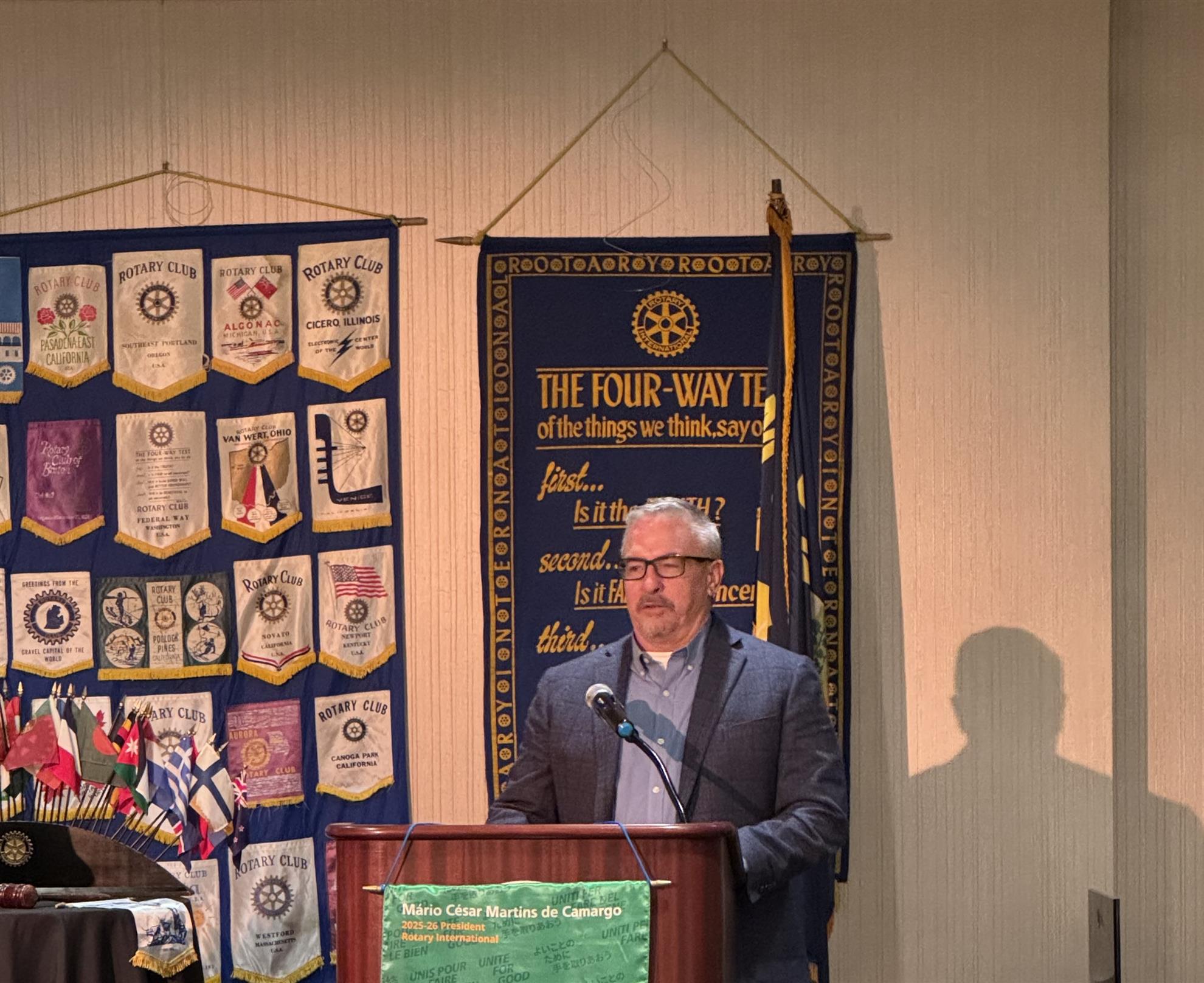
Al Beever, Executive Director of Montana State University’s Institute for National Security Research and Education (INSRE), delivered a comprehensive presentation on MSU’s national security initiatives. Al stated that MSU is Montana’s land-grant institution, established under a law that includes "military tactics"—the foundation of ROTC programs. INSRE was formally established in November 2004 by the Board of Regents. It operates under a "soft-funded" model: researchers must secure their own funding, making external partnerships critical. Al emphasized three core goals: growing impact on national security, improving student experience, and expanding industry partnerships. Al explained that Partnership Intermediary Law is a uniquely flexible federal law allowing MSU to serve as a bridge between government, industry, and academia. The law permits nearly all activities except manufacturing and janitorial services.
Al Beever, Executive Director of INSRE
Al Beever, Executive Director of Montana State University’s Institute for National Security Research and Education (INSRE), delivered a comprehensive presentation on MSU’s national security initiatives. Al stated that MSU is Montana’s land-grant institution, established under a law that includes "military tactics"—the foundation of ROTC programs. INSRE was formally established in November 2004 by the Board of Regents. It operates under a "soft-funded" model: researchers must secure their own funding, making external partnerships critical. Al emphasized three core goals: growing impact on national security, improving student experience, and expanding industry partnerships. Al explained that Partnership Intermediary Law is a uniquely flexible federal law allowing MSU to serve as a bridge between government, industry, and academia. The law permits nearly all activities except manufacturing and janitorial services.
MSU hosts three federal partnership intermediaries:
1. Department of Defense
2. Department of Homeland Security
3. Intelligence Community
MSU is the only academic institution in the Air Force Mentor-Protégé program, where it mentors small defense contractors like a prime contractor (e.g., Boeing). MSU supports efforts to decentralize semiconductor manufacturing from Taiwan to enhance national security. Applied Research Lab (ARL) at MSU is a secure research facility opened in 2019. In 2023, it received a perfect score from the Defense Counterintelligence and Security Agency (DCSA)—a national distinction. A newer program that identifies emerging technologies and promotes them to the military, called Defense Innovation On-Ramp Hub, differs from traditional fee-for-service models.
The program is currently working on: Plate Carrier Design: MSU designed the ballistic plate carriers used by U.S. soldiers, Marines, and airmen. Over 30 companies were involved, with more than half of MSU’s $65M annual budget flowing to industry partners; TPS-75 Radar Modernization: MSU helps maintain and upgrade this aging radar system, critical for defense despite its age; "Hair Clip" Antenna Mount: A lightweight, adaptable antenna holder for Special Operations Forces, usable on branches, roll cages, or even animal manes; Exit Wound Hemostatic Sponge: MSU partnered with a company to make a medic-invented sponge injectable into torso wounds, saving lives by creating internal pressure; STORM Unit (Small Tactical Optical Rifle Mounted Target Designator Laser Range Finder): A laser rangefinder partly manufactured in Bozeman; "Narco Boat": Inspired by drug traffickers’ autonomous boats, MSU built a low-cost, autonomous resupply vessel for Marines in the South Pacific. The project rapidly transitioned from research to a program of record; Electronic Warfare and Free Space Optics: Secure ship-to-ship and ship-to-shore laser communication systems that resist interception; Load Reduction Initiatives: MSU engineers analyzed and reduced the weight of gear carried by Marine rifle squads, a project initiated at Quantico, Virginia; and the Pylon Stand for Air Force Maintenance: Designed for a petite airman in Germany to independently rotate heavy F-16/F-22 pylons. Deployed in Okinawa and Spangdahlem, with MSU staff traveling to support further implementation.
MSU hires 30+ students annually into full-time roles; some now lead their own teams. The students work on real-world, not hypothetical, projects with real funding. Capstone projects number around 25 at any time, involving students from all majors, not just engineering. Students participate in Field User Evaluations (FUE), Limited User Evaluations, and Human Factors Exercises. MSU hosts the Interagency Body Armor Working Group in May, bringing 50+ officials from DoD, FBI, DHS, and Secret Service to evaluate helmets, eyewear, and plate carriers.